 Menu
MenuGeneral François Marie d'Aboville
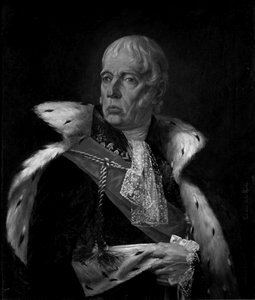
Born: January 23, 1730
Place of Birth: Brest, Finistère, France
Died: November 1, 1817
Place of Death: Paris, France
Arc de Triomphe: DABOVILLE on the north pillar
Pronunciation:
A career artillery soldier, François-Marie d'Aboville first joined the artillery in March of 1744 at age 14. He then became an aide-de-camp to his uncle General Julien d'Aboville and he participated in the War of the Austrian Succession. D'Aboville served in Flanders and during this time he fought at the Battle of Fontenoy and the Battle of Lawfeld. Less than a decade later he took part in the Seven Years War and he served at the sieges of Münster in 1759 and 1762. During that war he was also promoted to capitaine and after the peace was signed he was named a Knight of Saint Louis. D'Aboville next served in the regiment of La Fère and he obtained the rank of lieutenant colonel in 1778. In 1779 he became lieutenant colonel of the artillery of Besançon and then in 1780 he was sent with Rochambeau's expedition to take part in the American Revolutionary War. D'Aboville was promoted to colonel and he served as chief commander of the artillery, culminating in his service at the siege of Yorktown in 1781. After returning to France in 1783, he took command of the artillery of La Fère in 1785. In 1788 d'Aboville was promoted to maréchal de camp. During this time he proposed the merging of the artillery and the engineers, the creation of the horse artillery, and reinforcing the hubs of artillery wheels with metal.
With the arrival of the French Revolution, d'Aboville was named a member of the military committee and in 1791 he was named an inspector general of artillery. The next year he took command of the artillery of the Army of the North and in September he was promoted to lieutenant general and served at the Battle of Valmy. In late February of 1793 D'Aboville was named commander of the Army of the Moselle but he did not immediately take up the command. However he did serve as interim commander from roughly the end of March to the end of April and then he continued to serve with that army. That July d'Aboville was suspended but in August the representatives of the people with the Army of the Moselle reinstated him in his position. In September he again was forced to step down and in November he was placed under house arrest in Soissons for being a noble.
In June of 1794 d'Aboville was summoned by the Committee of Public Safety and in August they ordered d'Aboville to serve as the commissary overseeing supplies and logistics to support the operations of the siege of Quesnoy. D'Aboville fulfilled this command and took part in the recovery of Quesnoy, Landrecies, Valenciennes, and Condé. At the end of the year he was reinstated in the rank of général de division. In 1795 d'Aboville was named an inspector of artillery for Paris, Belgium, Holland, and the North and he also became director of the arsenal of Paris and president of the central committee of artillery.
In the year 1800 d'Aboville was named the premier inspector general of artillery for the army. In 1802 he was named a senator and he retired from the army, and the following year he served as vice president of the senate. In 1804 d'Aboville was rewarded with the Grand Eagle of the Legion of Honor and he traveled to Alessandria that year to receive Pope Pius VII. In 1805 he commanded the National Guard of Doubs, Léman, and Jura. He continued to serve France, serving as governor of Brest for half of 1807 before returning to the senate. In 1808 d'Aboville was named a Count of the Empire and then in 1809 he took command of a division of the National Guard assembled at Brussels. He returned to the senate later that year. In 1812 d'Aboville once again supported the National Guard, organizing troops in the 6th military division. Two years later when Napoleon abdicated the throne, d'Aboville supported the incoming government and was named a Commander of Saint Louis. During the Hundred Days of 1815, d'Aboville was named a Peer of France. Both of his sons followed their father in artillery careers and served with distinction during the French Revolution and Empire.
Bibliography
- Divry, Arnauld. Les Noms Gravés sur l'Arc de Triomphe. Paris: L'Harmattan, 2017.
- Six, Georges. Dictionnaire Biographique des Généraux & Amiraux Français de la Révolution et de l'Empire (1792-1814). 2 vols. Paris: Gaston Saffroy, 2003.
Related Pages:
Updated June 2026
© Nathan D. Jensen